Context
Accord started when Victor came to me with an idea for reducing the nagging around household chores. I built an early prototype, and together we shaped it into a broader product for household coordination.
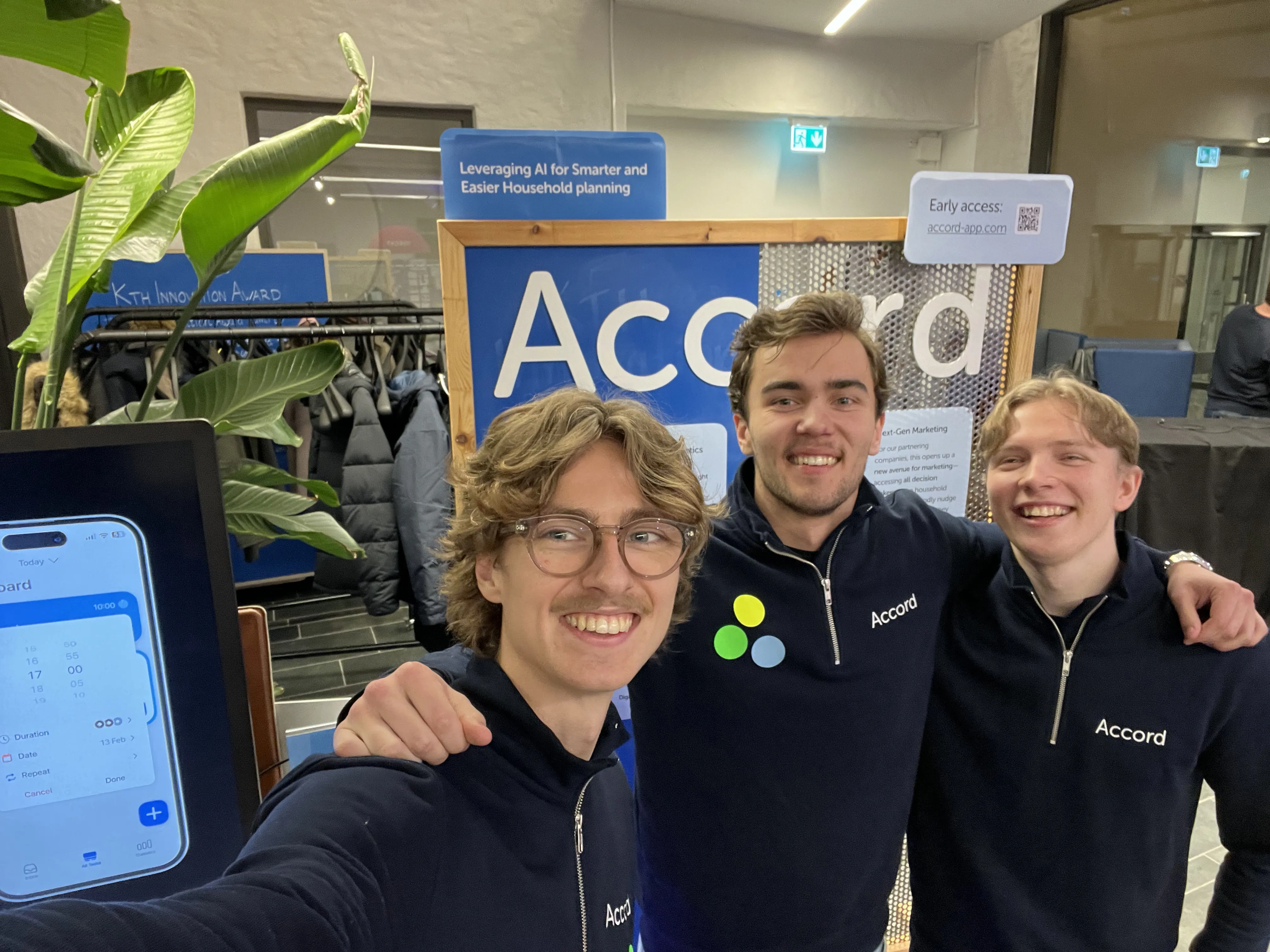
From there, we recruited Elias, joined KTH Innovation, launched the first version, and reached more users than we expected, helped by international media coverage across multiple countries and languages.
The launch gave us traction, but it also made the core product challenge visible. Users understood the idea. The harder problem was getting households to keep using it.
The challenge
The first version had conceptual traction. Users understood the problem and liked the idea.
But too many dropped off before Accord became part of their household routine. Adding more users or more features would not solve that (we tried). We had to understand why people failed to reach repeated use.
Our key obsession became: user retention.
What needs to happen before a household understands Accord well enough to keep using it?
My role
My role sat between business strategy and technical execution.
I worked closely with the CEO on roadmap, financing, positioning, partnerships, growth, and the broader direction of the company. I also worked closely with the CTO on technical feasibility, implementation tradeoffs, data flows, product logic, and how ideas should actually be built.
As the team grew, I took responsibility for interns: onboarding them, managing their work, giving feedback, and turning broad product needs into concrete tasks.
Later, I also started contributing directly to development. That made my product work more grounded, because I could better understand how design decisions affected data structures, implementation complexity, and the technical shape of the product.
Retention and discovery
During this period, Accord became my full-time focus. I tied both my bachelor thesis and internship course to the company: the thesis focused on onboarding and retention, while the internship formalised my ongoing work as a co-founder.
That gave me the time and structure to go deep on one live product problem, using real users, real data, and real product changes.
Over time, we spoke with more than 100 users through support, feedback, testing, and informal conversations. Before the redesign period, we ran a focused discovery sprint and called around 30 users in about a week. We also had an external company test the product.
We combined those conversations with PostHog data to look for repeated patterns: where users hesitated, misunderstood the product, or were asked to do too much before seeing value.
What we changed
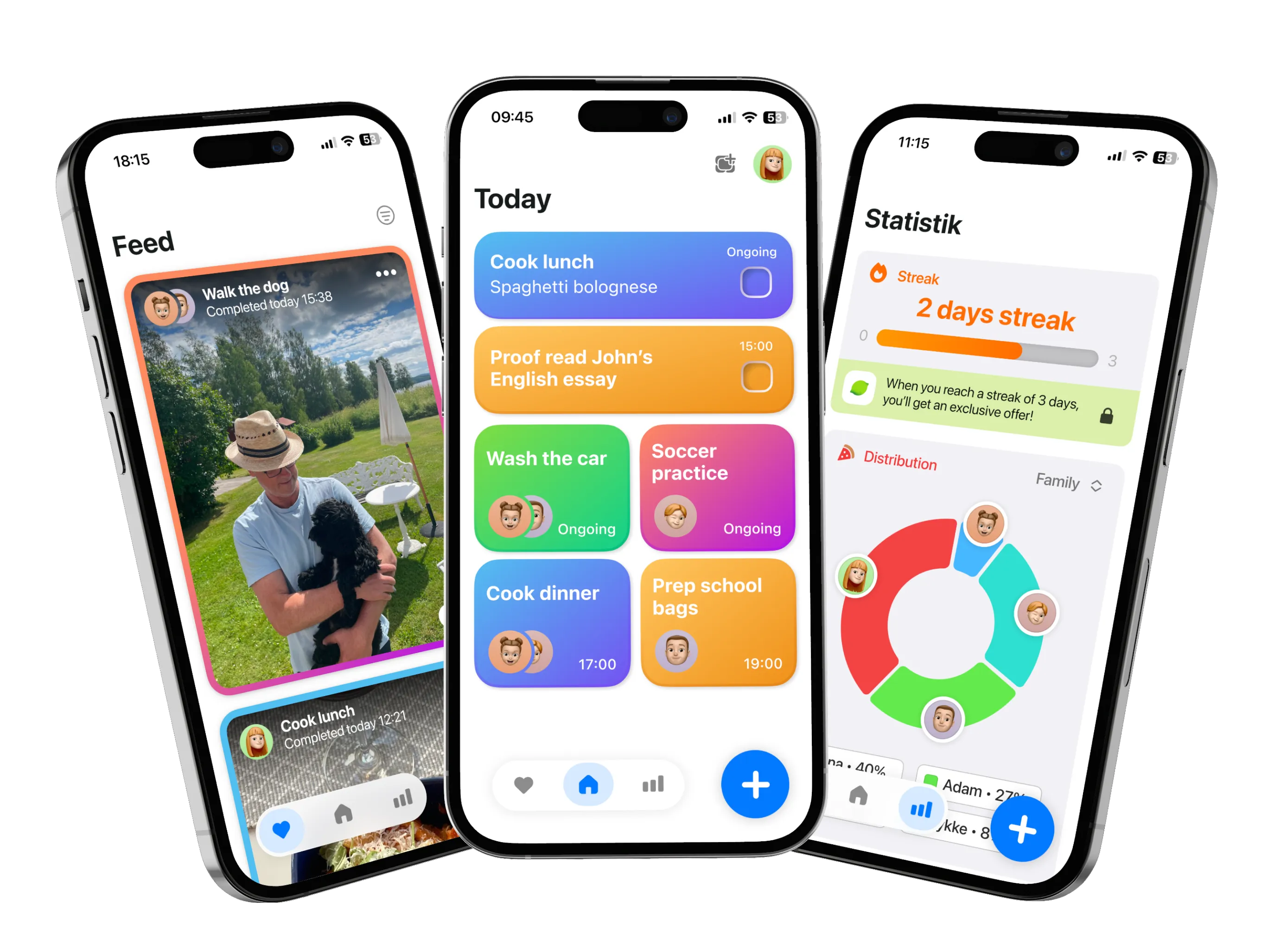
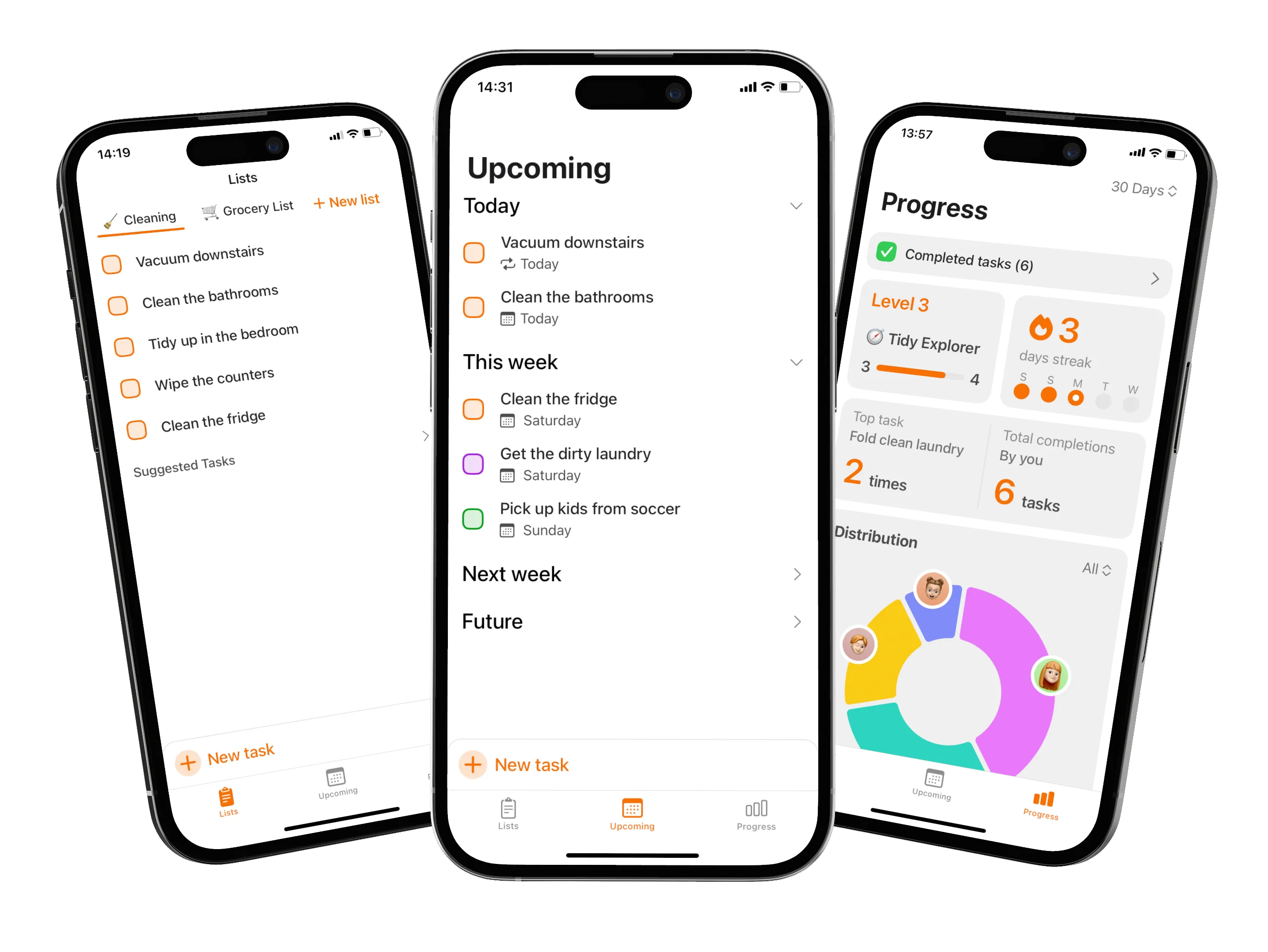
The redesign was not just a visual refresh. It was an attempt to make the product easier to understand, easier to start, and easier to bring into a real household.
We focused on the parts of the product that affected activation and early retention.
Clearer onboarding
Helping users understand what Accord was and what to do first.
Less setup friction
Reducing the work needed before users reached value.
Reduced complexity
Removing unused features and simplifying the early experience around the actions that mattered most.
V1
V2
Outcome
After the rework, week one retention increased from 16% to 36% , while week four retention increased from 7% to 18% .
That mattered because the improvement was not only a short-term onboarding bump. More users were also returning weeks later.
Over time, Accord grew to more than 30,000 registered users , 2,500 weekly active users , profitable subscription revenue, and international media coverage across multiple countries and languages.
France became the largest user market, but the product reached people far beyond one country. One moment that made this feel real was hearing Accord discussed on a French-language radio show from Montreal.
Reflection
Accord taught me that product management in an early-stage team is less about perfect frameworks and more about keeping the important questions visible.
- What are users actually doing?
- Where are they getting stuck?
- What should we not build yet?
- What does the team need in order to move?
- What evidence would change our minds?
The most important lesson was that traction is not the same as retention. A product can be understood, liked, and shared, while still failing to become part of someone's routine.